
Vancouver USA Arts & Music Festival
Friday, August 7, 2026
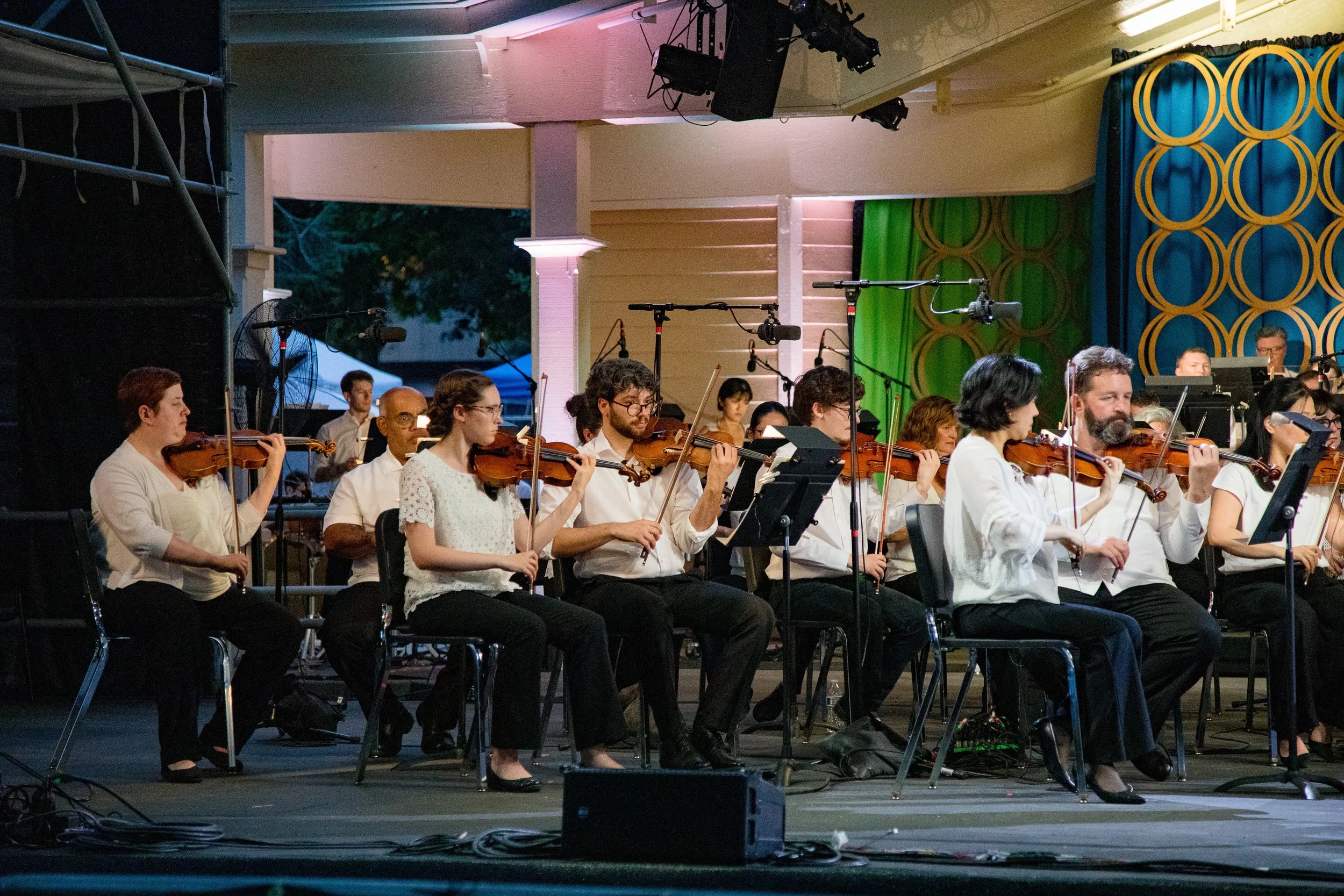
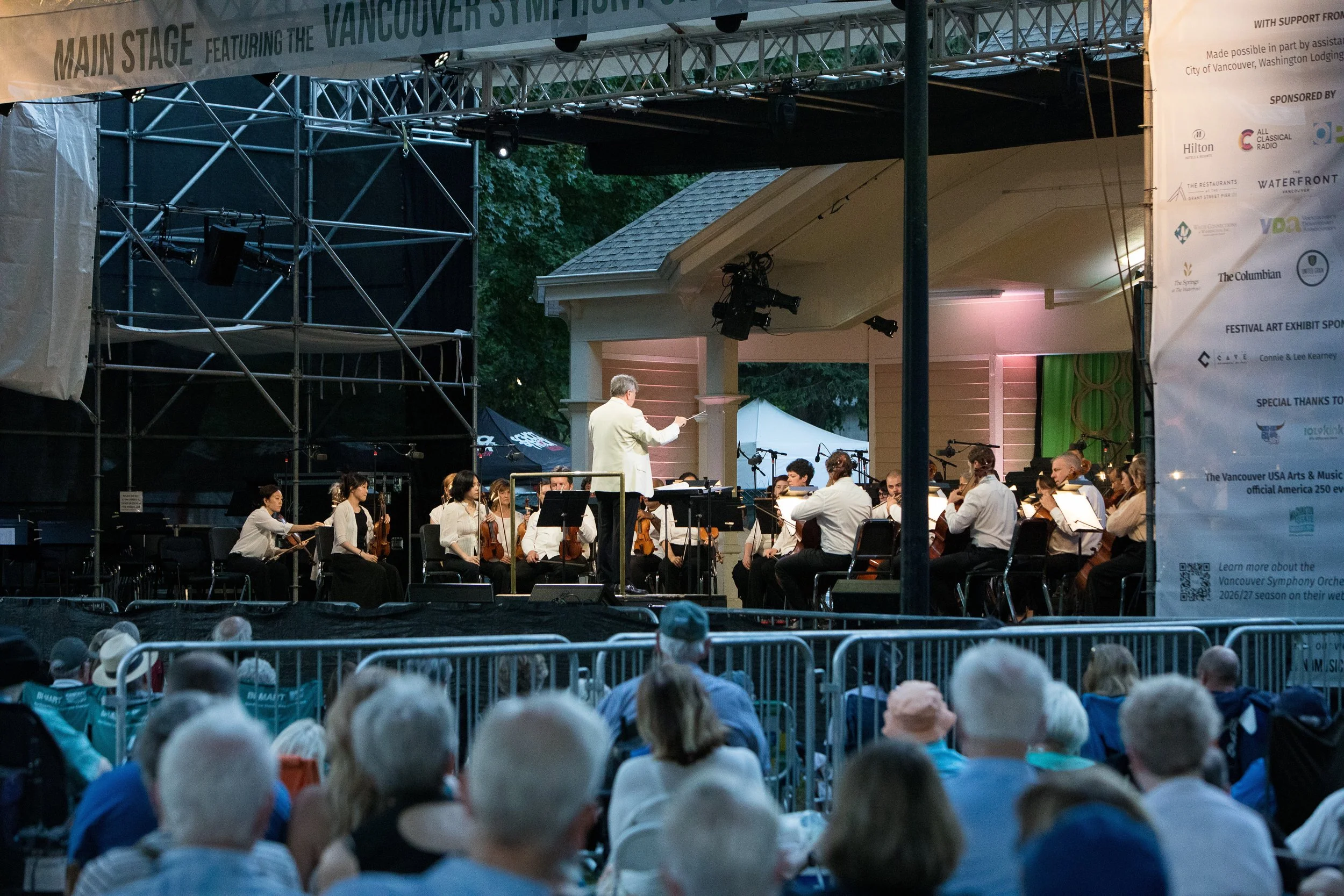
Friday night marked the Vancouver Symphony Orchestra USA’s opening performance of the festival, and from the first notes, the energy at the park was unmistakable.
The program brought together highlights from Disney’s Fantasia with excerpts from John Williams’ Star Wars suite, giving audiences a night filled with familiar music, vivid orchestral color, and plenty of dramatic moments. The musicians seemed just as excited to be there as the audience. The orchestra played with focus and momentum, with especially bright brass, strong rhythmic drive, and a sense of scale that made the music feel cinematic even without a screen.
For many audience members, the music carried an immediate sense of recognition. Themes and orchestral colors connected back to beloved films and childhood memories, while younger listeners experienced the same music in the excitement of a live concert setting. There was a noticeable sense of delight throughout the audience as familiar passages emerged and the orchestra brought them to life in real time.
That connection between music, memory, and imagination became the focus of the intermission conversation between Maestro Salvador Brotons and Warren Black. They spoke about the role film music can play in introducing new audiences to orchestral music and why these scores have such lasting emotional power.
Their conversation captured much of what the audience had already been experiencing. Film music gives listeners something familiar to hold onto. A melody can instantly create a picture in the mind’s eye, return us to a favorite scene, or bring back a memory years later. At the same time, hearing that music performed by a live orchestra reveals just how much of its emotional impact comes from the musicians themselves.
The evening also showed how naturally film music can open the door to the broader orchestral experience. Audiences do not need specialized knowledge to respond to the sweep of the strings, the brilliance of the brass, or the tension and release created by the full orchestra. The emotional language was immediate.
Ending with the unmistakable sound world of John Williams and Star Wars brought the evening to an exciting close. The VSO’s musicians delivered the final selections with energy and precision, sending a delighted audience out of the festival with a strong start to the festival weekend- and a reminder of just how powerful familiar music can become when experienced live.
-Adrienne Stratton
————————————————————————————————————————————————————————————————————————
Saturday, August 8, 2026
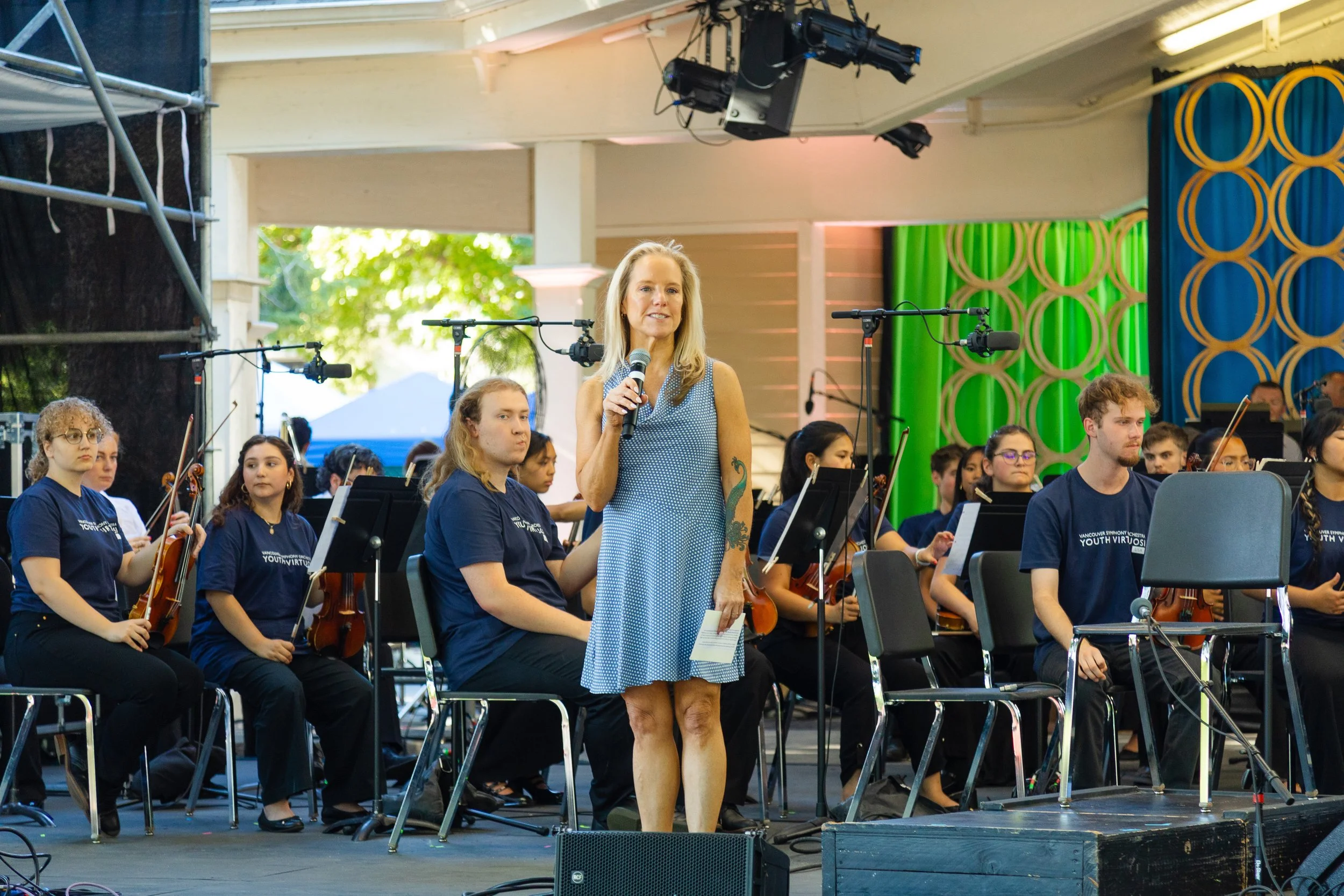
Day 2 of the festival opened with the VSO Youth Virtuosi, or VYV, taking the stage alongside members of the Vancouver Symphony Orchestra USA for a performance that showed just how much young musicians can bring to a major orchestral program.
During the intermission interview, All Classical Radio’s Brandi Parisi spoke with cellist Julian Schwarz and VYV conductor Ken Selden about the broader role youth orchestras play in the arts ecosystem. Their conversation touched on how programs like VYV help young musicians develop at a high level while also creating future audiences, future performers, and future supporters of orchestral music. In that sense, the value of youth orchestras goes well beyond training the next generation of professionals. They help build the next generation of listeners.
The audience response made clear that VYV is something worth watching. Their appearance brought a different kind of energy to the festival, and audiences should stay tuned for more opportunities to hear these young musicians in the future.
The evening also featured internationally renowned violinist Pinchas Zukerman in Bruch’s Violin Concerto. Welcoming an artist of Zukerman’s stature is another sign of the VSO USA’s growing reputation and the high artistic level the orchestra continues to achieve. His appearance placed the orchestra alongside one of the most celebrated violinists of his generation and reflected the kind of major guest artistry that is becoming increasingly associated with the VSO.
Zukerman’s sound was immediately distinctive: clear, warm, and intensely lyrical. At times, the violin seemed almost to sing above the orchestra, with a directness and beauty of tone that held the audience’s attention from beginning to end. The orchestra met him with sensitivity and confidence, creating a performance that felt both refined and deeply expressive.
The program closed with Mussorgsky’s Pictures at an Exhibition, an especially fitting choice for an arts and music festival filled with both visual art and live performance. The work was inspired by an exhibition of paintings and drawings by Viktor Hartmann, many of which have since been lost. In that sense, the music has done something extraordinary. It has allowed those images to live on long after the original artwork disappeared. Pictures at an Exhibition has become one of the great examples of how one art form can preserve, reinterpret, and even immortalize another.
Ending the evening with this piece brought the festival’s visual and musical worlds together in a powerful way, closing Day 2 with a celebration of creativity, collaboration, artistic excellence, and the lasting impact of art.
-Adrienne Stratton
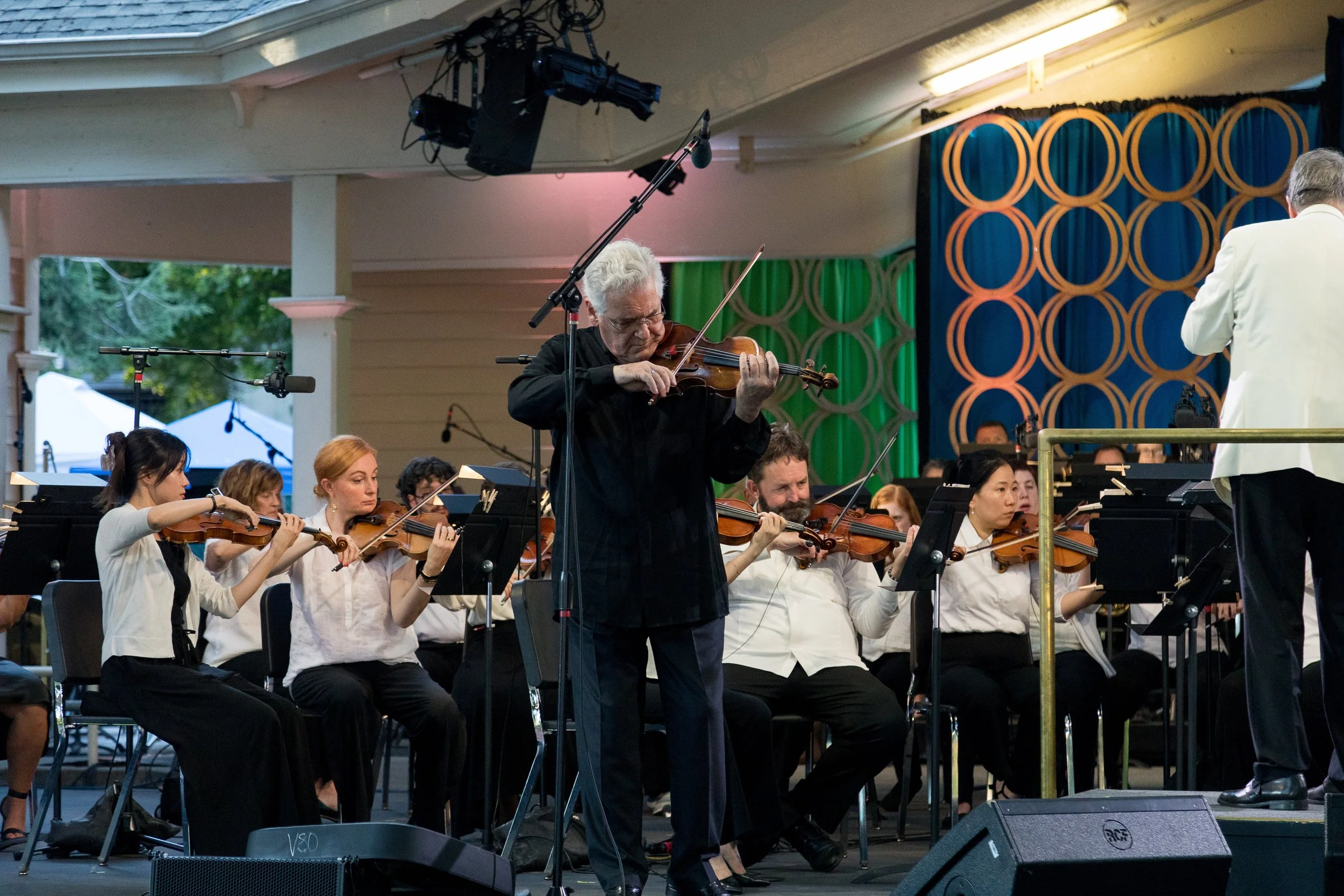
Pinchas Zukerman, violin
————————————————————————————————————————————————————————————————————————
Sunday, August 9, 2026
Day 3 brought the VSO USA’s festival performances to a remarkable conclusion with the official America 250 program. Sunday was an evening filled with jazz, spirituals, ancestry, invention, city sounds, and an overarching message of unity.
The concert opened with Valerie Coleman’s Umoja: Anthem of Unity, one of the most striking works of the weekend. “Umoja” is the Swahili word for unity and the first principle celebrated during Kwanzaa, emphasizing unity within family, community, nation, and race.
From the very beginning, the percussion section plays a central role in creating the sound world of the piece. Rather than entering with force, the percussionists begin by producing sustained, shimmering tones from pitched instruments such as vibraphone, glockenspiel, and marimba. Using violin bows instead of mallets, they draw long, glassy sounds from the metal bars, while crotales add another bright, bell-like layer above them. The result is almost weightless, creating an ethereal atmosphere before the main melody fully emerges.
As the piece develops, the percussion changes character completely. The same section that helps create the calm and spacious opening becomes part of the work’s conflict, adding sharper attacks, greater rhythmic intensity, and dramatic weight as the orchestra moves into more dissonant and unsettled territory. Brass and percussion together give these passages a physical impact that makes the disruption feel immediate.
That contrast makes the percussion especially important to the larger shape of Umoja. It helps define both ends of the journey: the delicacy and openness of the beginning, the tension and instability at the center, and eventually the return toward peace.
Between those extremes are beautiful passages in the lower strings, whose broad, warm sound gives the piece a sense of comfort and grounding. By the end, the harsher textures have subsided and the orchestra returns to a more unified, peaceful sound.
As Umoja unfolded, that delicate opening gave way to an extraordinary range of orchestral colors. There were passages carried by the lower strings that created a broad, warm sound, almost comforting in their richness, alongside increasingly urgent moments from the brass and percussion.
Coleman describes these dissonant interruptions as representing the forces of injustice, racism, and hate that threaten unity. The conflict eventually gives way to the return of the central idea, and the music finds its way toward resolution. After all of its tension, the work arrives again at a sense of peace and togetherness.
It was a powerful way to begin an America 250 program: not with a simple celebration of the country, but with a piece that asks what unity actually requires.
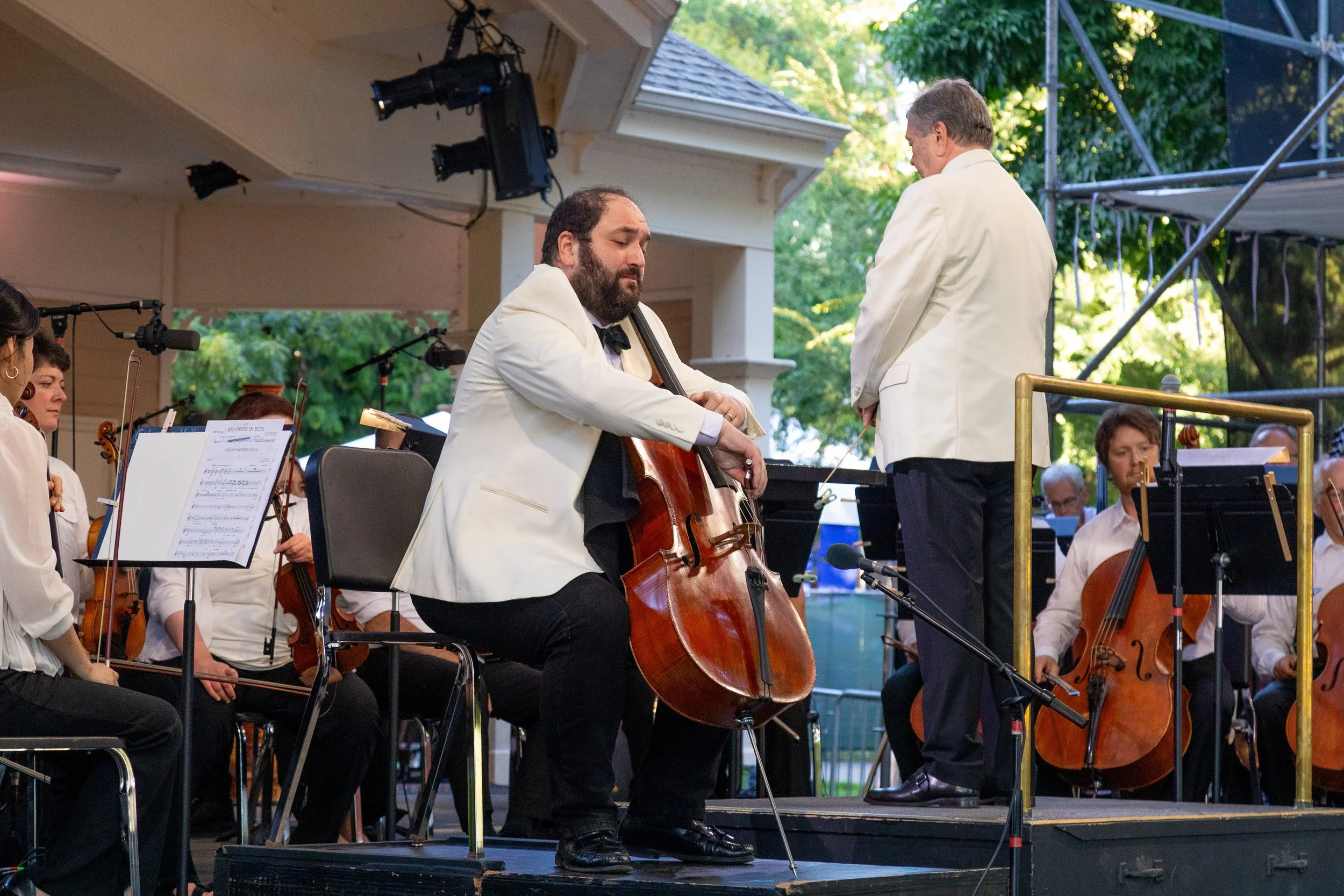
The evening also featured cellist Julian Schwarz performing Arthur Foote’s Cello Concerto, a work Schwarz has helped bring renewed attention to through years of advocacy and performance. Foote holds an important place in American music history as the first major American classical composer to receive his training entirely in the United States, making the concerto especially meaningful on a program celebrating American musical identity.
From there, the evening moved into one of America’s most recognizable musical languages with Gershwin’s Rhapsody in Blue, featuring jazz pianist Shelly Berg. Berg brought an infectious sense of joy and spontaneity to the performance. He seemed to be enjoying every moment at the keyboard, smiling throughout and playing with the freedom of a musician completely at home in both classical and jazz traditions. That improvisational spirit is central to what makes a performance like this so exciting. In Berg’s hands, the familiar Rhapsody in Blue felt alive rather than fixed. It was the kind of performance in which the audience understands that what is happening onstage belongs specifically to that night.
The program concluded with Gershwin’s An American in Paris, and once again the percussion section had some of the evening’s most memorable moments. Among the orchestral instruments were four pitched taxi horns, their unmistakable honks cutting through the ensemble and instantly creating the bustle of a busy city street. Around them, winds, strings, brass, and percussion moved with exhilarating energy, giving the music its combination of sophistication, humor, noise, motion, and unmistakable American character. It was difficult to imagine a more fitting conclusion to the festival. It’s nearly impossible to listen to Gershwin without smiling, and the audience proved it all night, responding to the swagger, warmth, humor, and sheer joy of the music from the first familiar phrase to the final burst of energy.
Across the program, American music was presented not as one sound or one tradition, but as a meeting place for many of them: jazz and classical music, spiritual traditions and contemporary voices, European influences and Black American musical innovation, individual creativity and collective experience.
And that may have been what made Day 3 feel so special. This was music about America that did not try to reduce America to a single idea. Instead, it celebrated the collisions, influences, histories, sounds, and people that continue to shape its artistic identity. After three nights of VSO performances, the festival ended with an orchestra at full force and with a program built around creativity, movement, memory, and the continuing work of coming together.
-Adrienne Stratton